STEP INSIDE

A small habitat.
A whole system.

Every piece has a part to play. Turn the tent, peel back its covering, and explore the hardware from the growing space to the workbench.

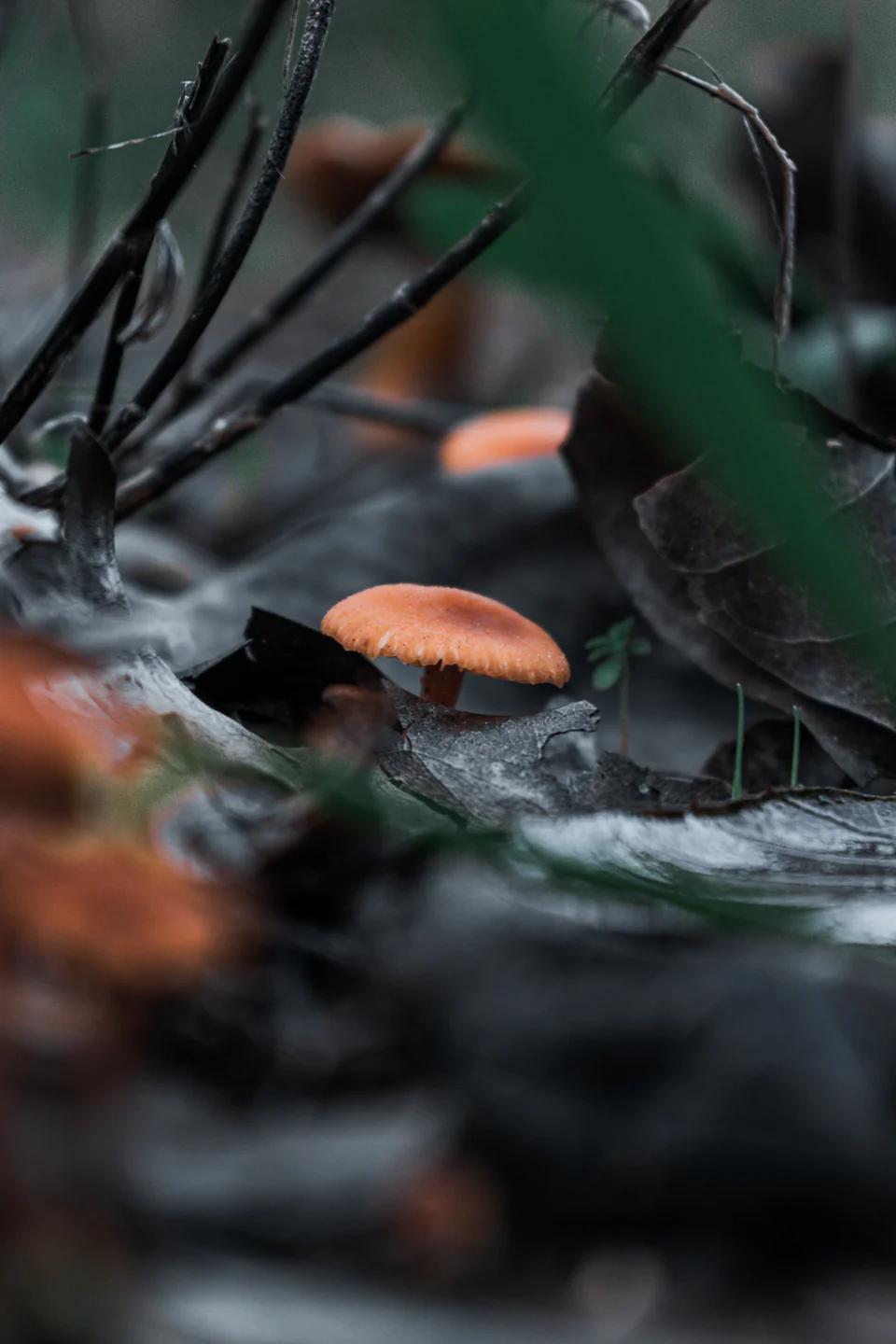
Small orange mushrooms emerging among dark leaves and branches.

A closer look at the world we grow.

Explore the experiment
Illustrated mushroom tent with hanging oyster bags, a PVC frame, ventilation, sensors, cameras and a Fresh air cooler with a high duct, beside an expanded workbench with a monitor, keyboard, mouse and breadboard.
Still view · Illustrative model

Drag to turn Click a component to explore + / − to zoom

Every component, by group

The habitat

Air & light

Observation

The workbench

Power & wiring

THE CONNECTED SYSTEM

A small ecosystem.
A considered system.

Behind the growing space, a Raspberry Pi connects observation, automation and a visual record. Follow the three paths that make it work.

Illustrated system flow

THE MEASUREMENT PATH

From the tent to the record.

Python services collect readings from the tent and the surrounding room. MQTT carries the measurements to a writer, which saves their history. Grafana queries that history and displays the experiment data.

  1. The SHT31 and SCD41 sensors send their readings together. The two paths merge before Mosquitto, the MQTT broker.
  2. Mosquitto carries the published measurements to the database writer.
  3. The database writer stores the measurements in TimescaleDB.
  4. Grafana visualizes the stored measurements from TimescaleDB.
The observe path as a small model: SHT31, SCD41, Mosquitto, Database Writer, TimescaleDB, Grafana, joined by glass tubes of light.The observe path as a small model: SHT31, SCD41, Mosquitto, Database Writer, TimescaleDB, Grafana, joined by glass tubes of light.

THE CONTROL PATH

A condition becomes a decision.

The controllers consider environmental readings alongside the settings for the cultivation phase. They send commands through MQTT to the services responsible for ventilation, moisture and lighting.

  1. Readings and phase settings provide the context for a decision.
  2. The controllers, Python services, evaluate the configured conditions and publish commands through Mosquitto, the MQTT broker.
  3. Mosquitto routes the commands to the actuator services.
  4. The actuator services drive the fan, humidifier and LEDs.
The respond path as a small model: Readings & Phase Settings, Controllers, Mosquitto, Actuator Services, Fan, Humidifier, LEDs, joined by glass tubes of light.The respond path as a small model: Readings & Phase Settings, Controllers, Mosquitto, Actuator Services, Fan, Humidifier, LEDs, joined by glass tubes of light.

THE VISUAL RECORD

Make the slow changes visible.

A phase-aware scheduler captures still photographs. Selected images and completed timelapses can then be prepared and published with the research, preserving the context of what the cameras observed.

  1. The capture schedule uses a systemd timer, with timing following the cultivation phase.
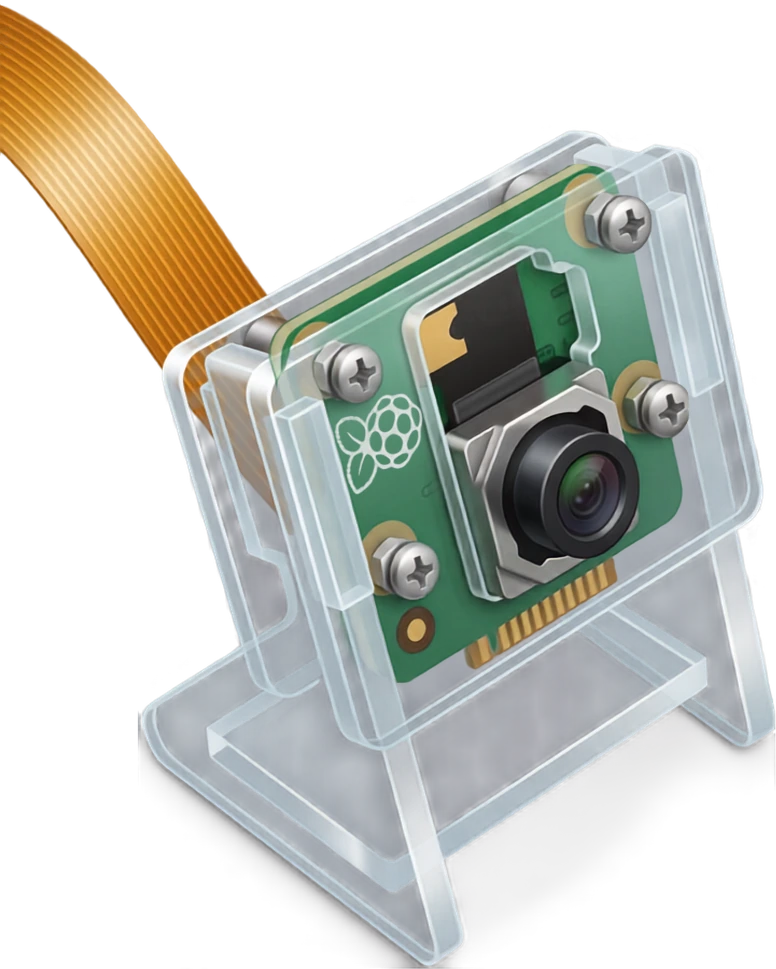
  2. Two cameras photograph the tent and ambient view using Camera Module 3 Wide cameras.
  3. Image storage keeps the captured still photographs as local media files.
  4. Media preparation selects images and produces completed timelapses.
The record path as a small model: Capture Schedule, Two Cameras, Image Storage, Media Preparation, joined by glass tubes of light.The record path as a small model: Capture Schedule, Two Cameras, Image Storage, Media Preparation, joined by glass tubes of light.

A small environment.
A bigger question.

What can we learn when we make the growing environment observable?

Smart Mushroom Hub brings oyster mushroom cultivation, environmental sensing, and a little automation into one carefully observed space. A Raspberry Pi connects the physical experiment to its digital record.

The tent and the room around itThe growing tent stands inside the room. One pair of sensors measures the air in the tent and a matching pair measures the room, so the two can be compared. The fan, humidifier and LEDs act on the tent only.THE ROOM · REFERENCETHE TENT · GROWING SPACESHT31 · SCD41fan · humidifier · LEDs act hereSHT31 · SCD41compared
Two matching sensor pairs: one in the tent, one in the room.

01 / THE DESIGN

The tent, read against the room around it.

The same pair of sensors sits in each, so a change inside the tent can be told apart from a change in the room. Only the tent is ventilated, humidified and lit.

MEASURED
Temperature, humidity and CO₂In the tent and in the room around it.
CONTROLLED
Fan, humidifier and LEDsAdjusted to the cultivation phase.
RECORDED
Photographs and timelapsesFrom both cameras, on a schedule set by the phase.

02 / THE SETUP

What grows, and what runs it.

THE SPECIES
Oyster mushrooms
THE SUBSTRATE
Pasteurized straw
THE TENT
185 × 82 × 55 cm
THE SENSORS
Two SHT31 and two SCD41: one of each in the tent and in the room
THE CAMERAS
Two Raspberry Pi Camera Module 3 Wide
THE COMPUTER
Raspberry Pi 5 with an AI HAT+ 2

Each run's dates, what went wrong and what it changed are logged in Experiment Runs

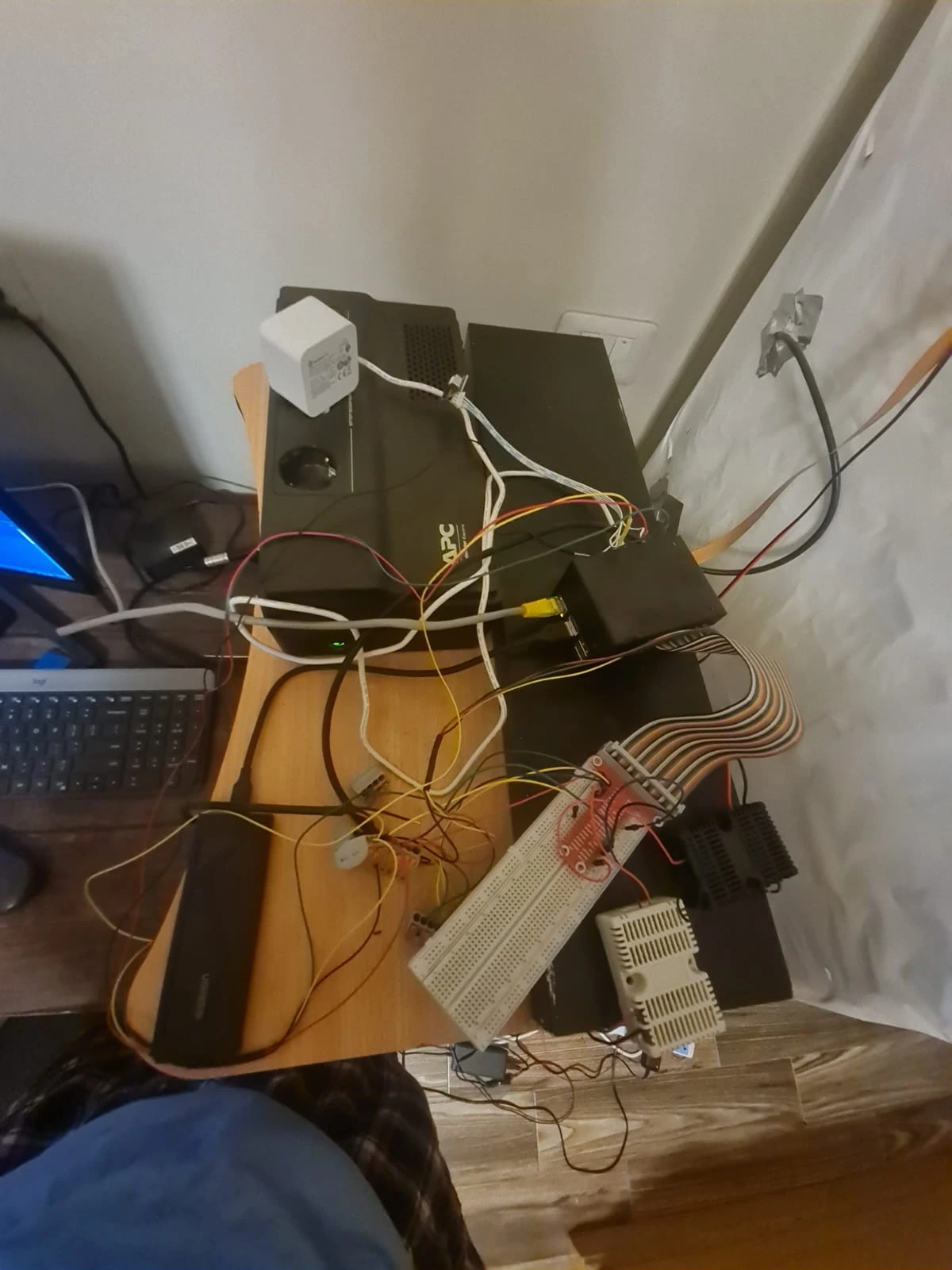
  1. 1Raspberry Pi 5
  2. 2Breadboard & T-cobbler
  3. 3Wago junctions
  4. 4APC UPS
FROM THE WORKBENCHReal hardware. Select a part to find it in the habitat.

Growth has
its own rhythm.

The needs of a living system change as it develops. These are conceptual stages of cultivation, with different reasons to observe, illuminate, humidify, or ventilate.

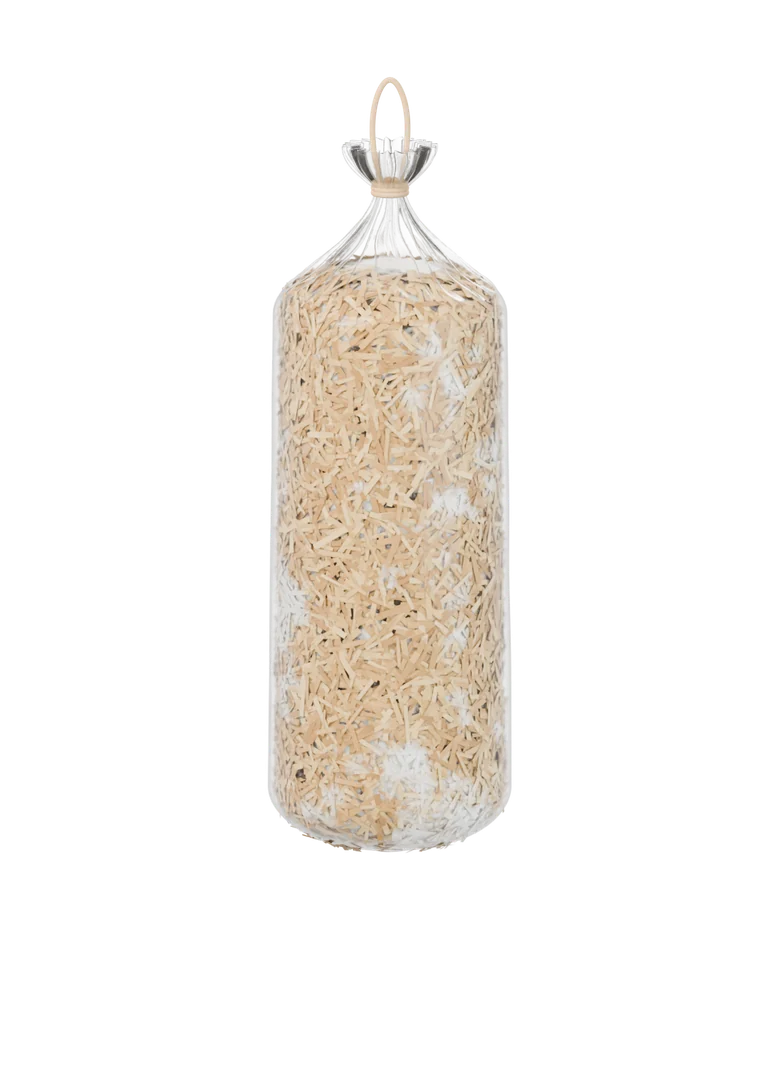
STAGE 01 / INCUBATION

Much of the work happens out of sight.

Mycelium spreads through the straw inside each bag. What is visible on the surface is only part of the story, so a quiet-looking bag does not tell us everything about colonization.

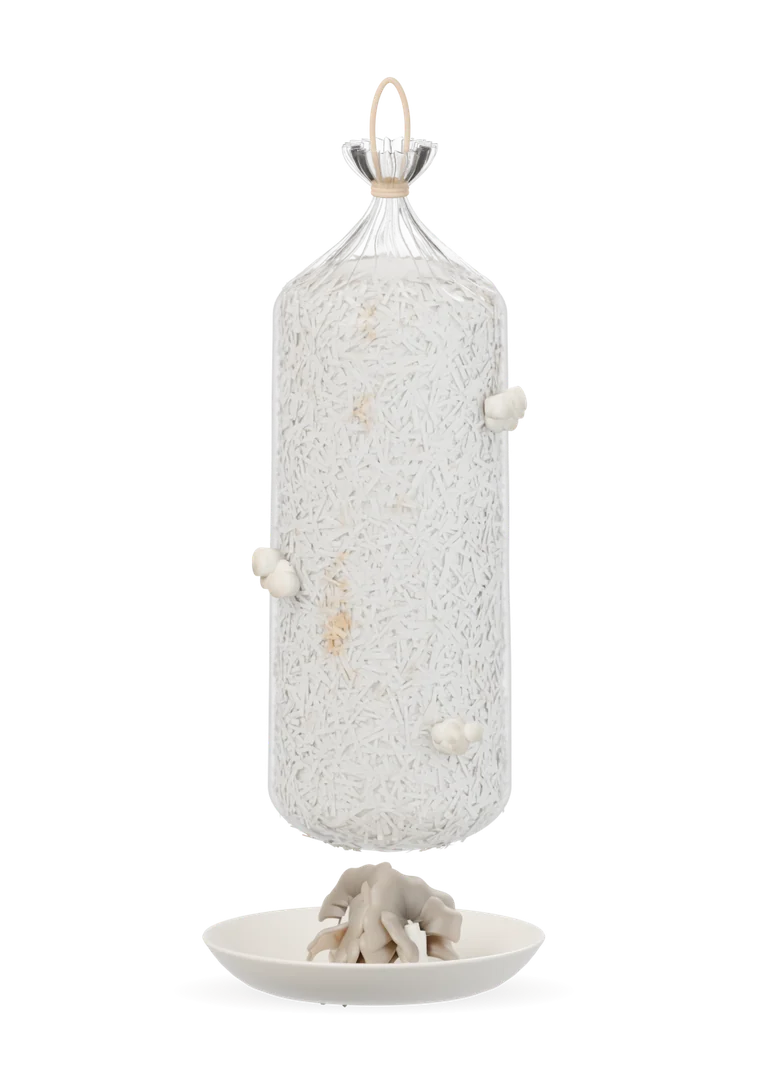
Rendered illustration of a hanging bag of chopped straw in clear plastic, with white mycelium beginning to spread through it.

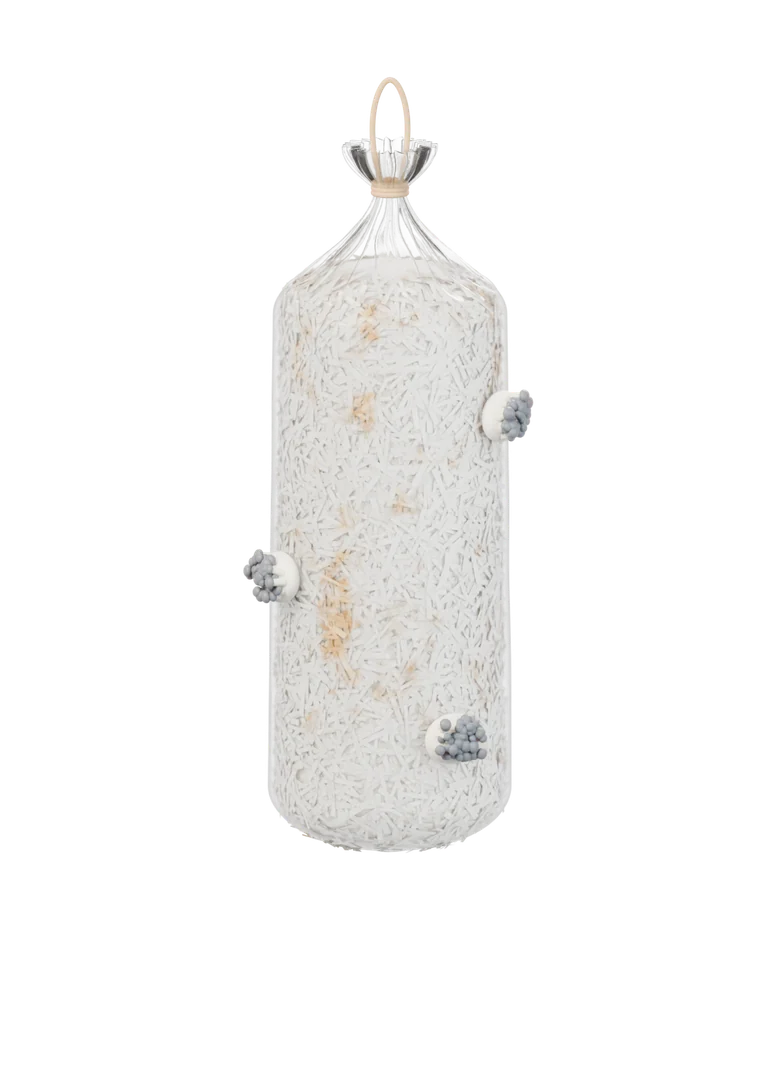
STAGE 02 / PINNING

The first small signs become visible.

Tiny mushroom initials mark a visible transition. This is a useful moment to look closely at the relationship between the growing environment and what the cameras can actually observe.

Rendered illustration of the same bag, now white with mycelium, with clusters of tiny grey-tipped mushroom pins at three cuts in the plastic.

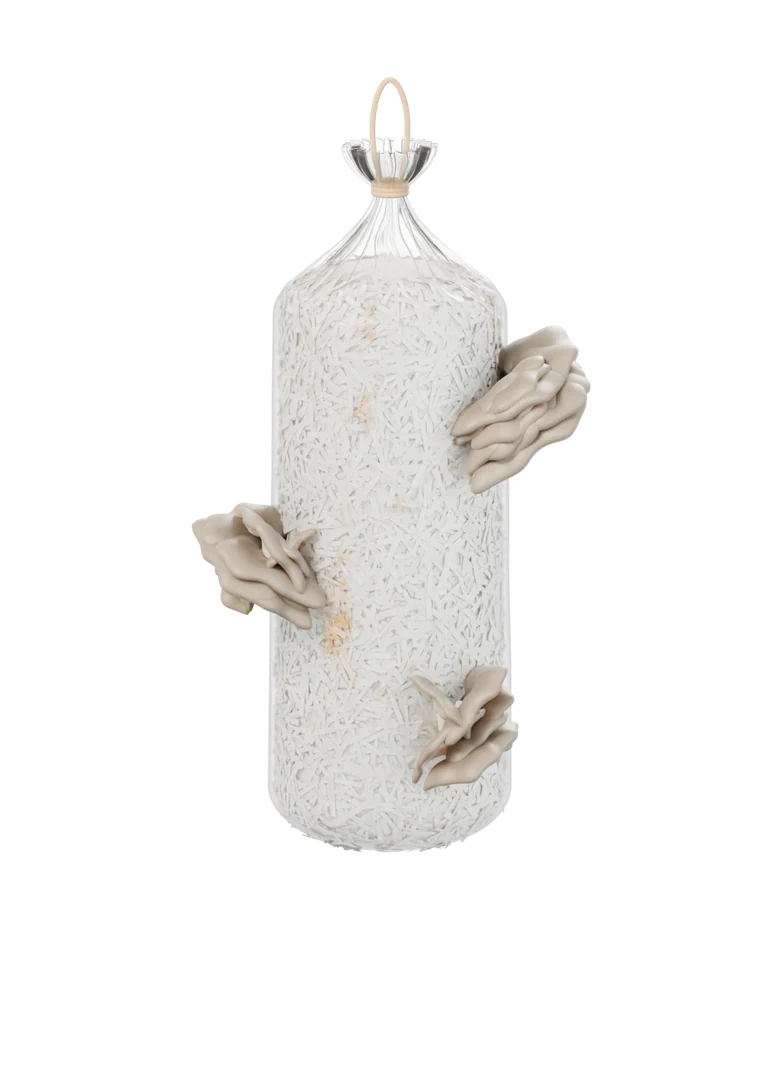
STAGE 03 / FRUITING & GROWTH

Slow changes start to take shape.

Oyster mushrooms develop into their recognizable clusters. Scheduled photographs can make gradual changes easier to see, while environmental measurements provide a separate record in Grafana.

Rendered illustration of the bag with grey-brown oyster mushroom clusters growing from its three openings.

STAGE 04 / HARVEST

An endpoint, and a new set of questions.

Harvest offers a moment to document the outcome and review the run. Any conclusions need to account for the actual observations, the conditions, and the gaps in the record.

Rendered illustration of the bag with cut stems at its openings and the harvested oyster clusters in a dish below; not evidence of an actual harvest.
EXPERIMENT RUNS FIELD LOG

Every run
teaches the next.

Not every run reaches harvest. Each one is kept here as it happened: what was tried, what went wrong, and what changed before the next run began.

RUN 01 / STALLED IN COLONIZATION

The straw never fully colonized.

CAMERA RECORD18 Aug – 14 Sep 2026

What I tried

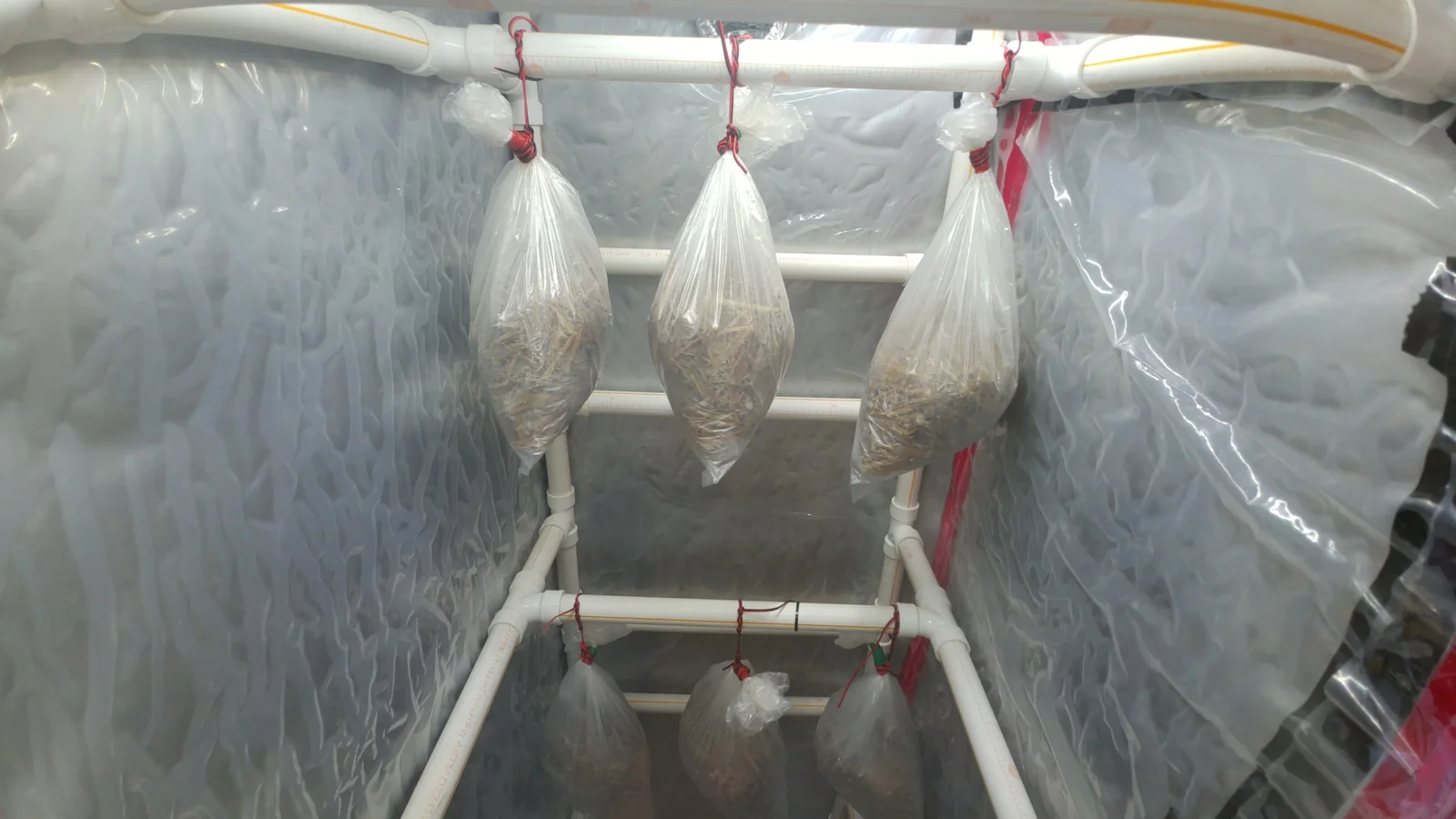
Pasteurized straw, inoculated and hung in the tent to incubate, with every bag sealed inside three layers of plastic.

What happened

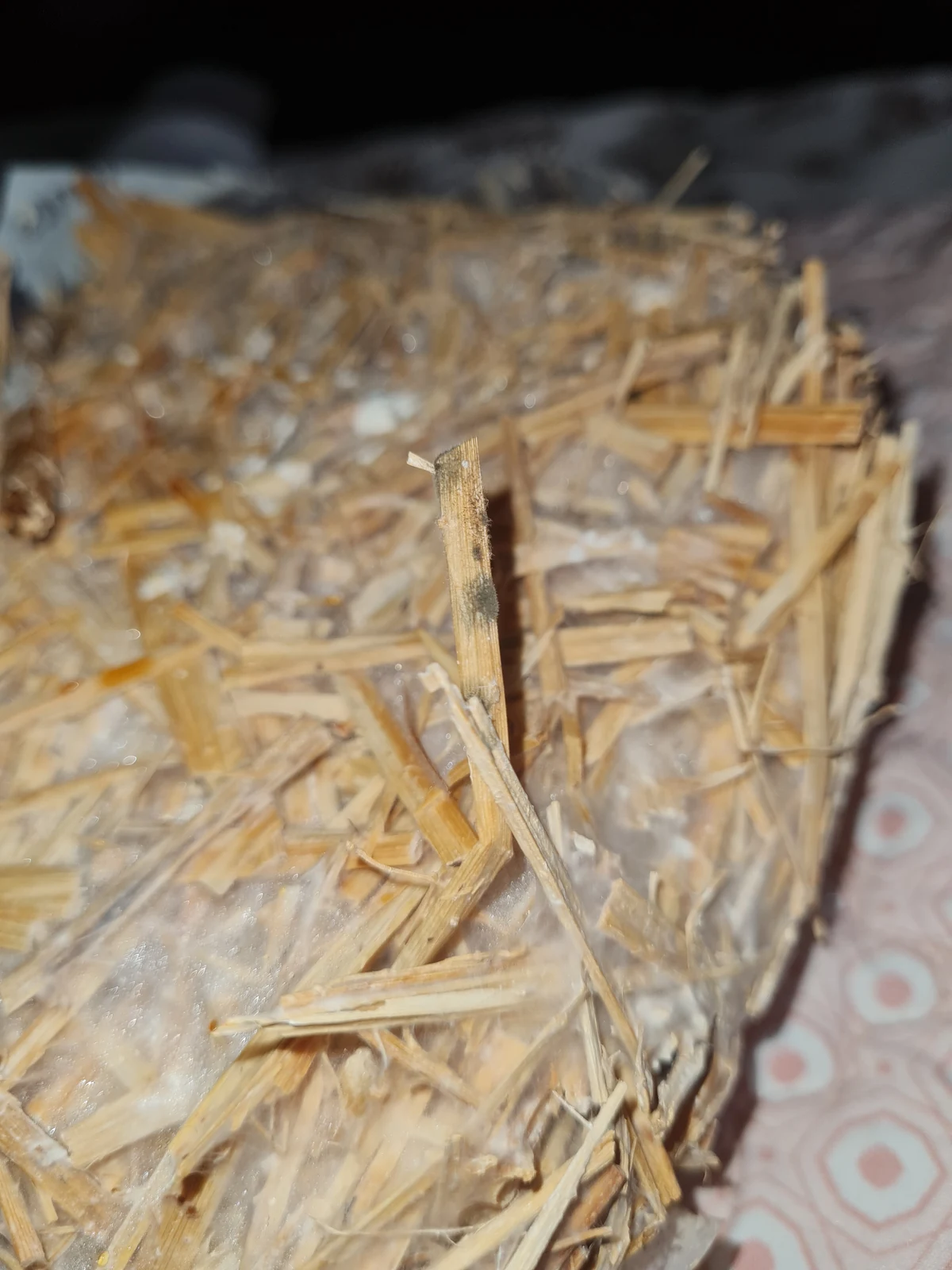
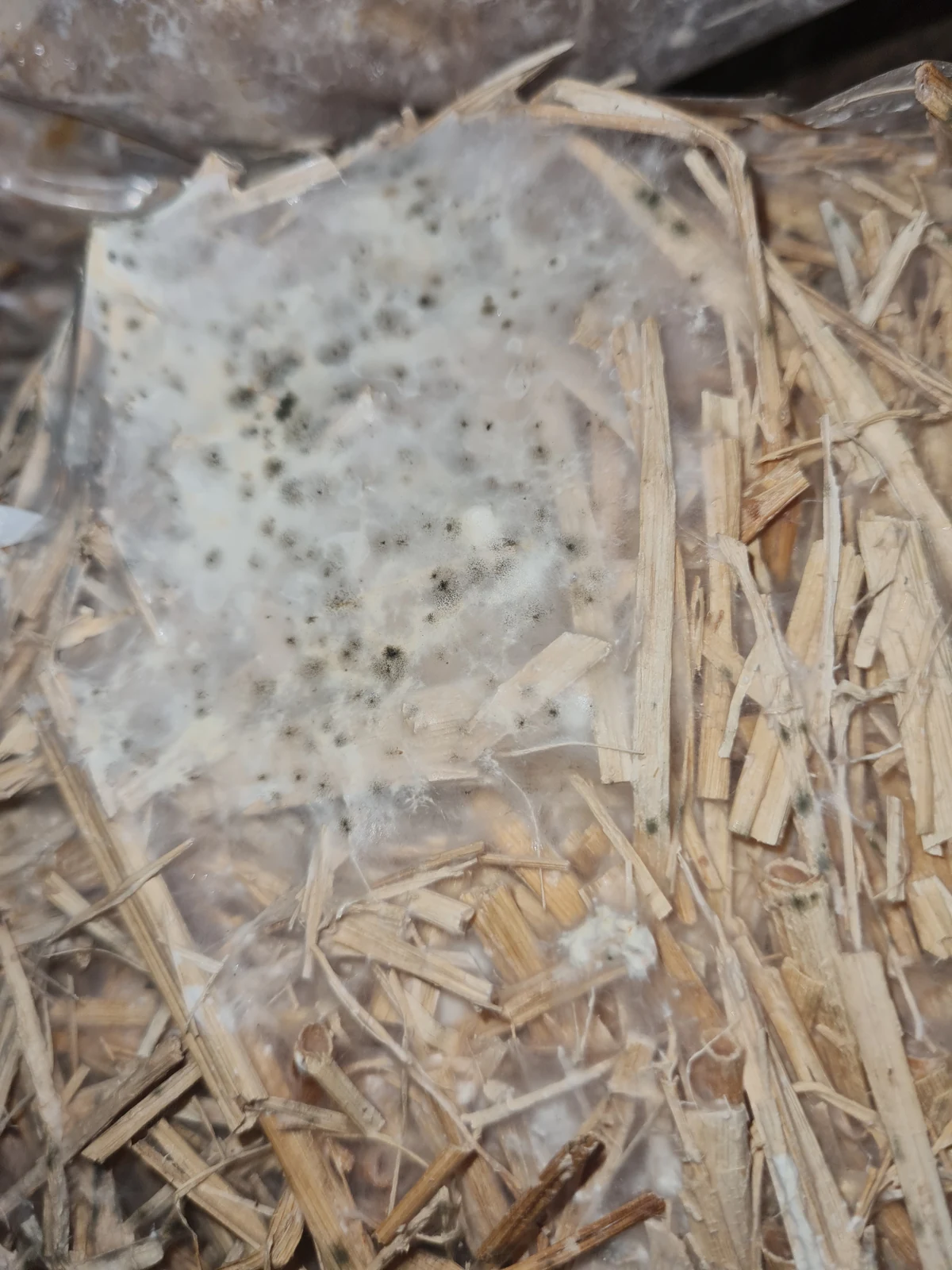
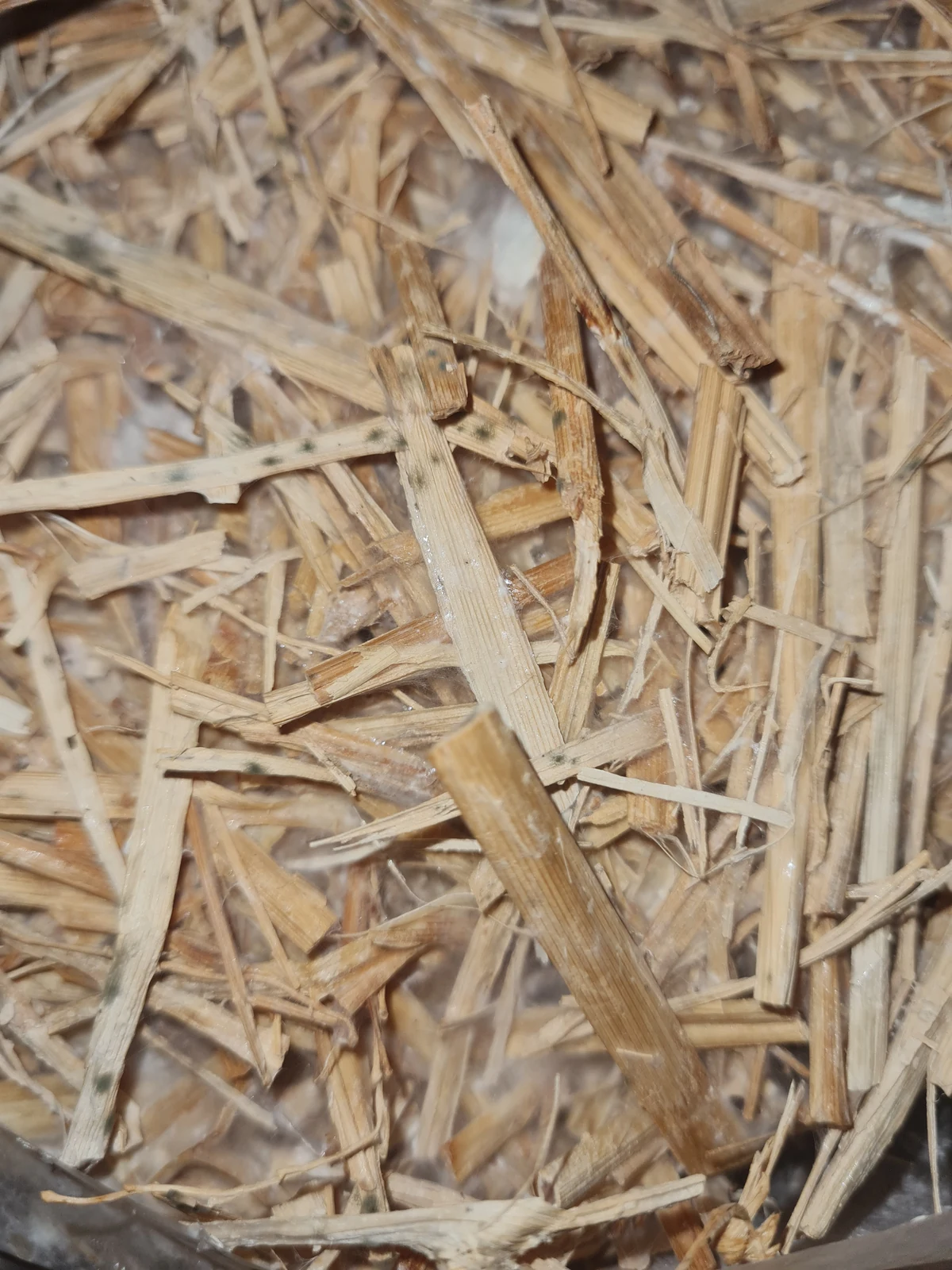
Colonization stalled. The mycelium never spread far enough through the straw for the bags to move on to pinning.

Why

Two things worked against it: temperatures of about 29 °C on warm days, and triple bagging that left almost no fresh-air exchange.

CARRIED FORWARD

  • A desert air cooler, to bring warm days down from about 29 °C to 25 °C.
  • Surgical tape over the bag openings, letting air in while keeping bacteria out.
RUN 02 / ROTTED AT FRUITING

Open tops let the water in.

CAMERA RECORD14 Sep – 1 Nov 2026

What I tried

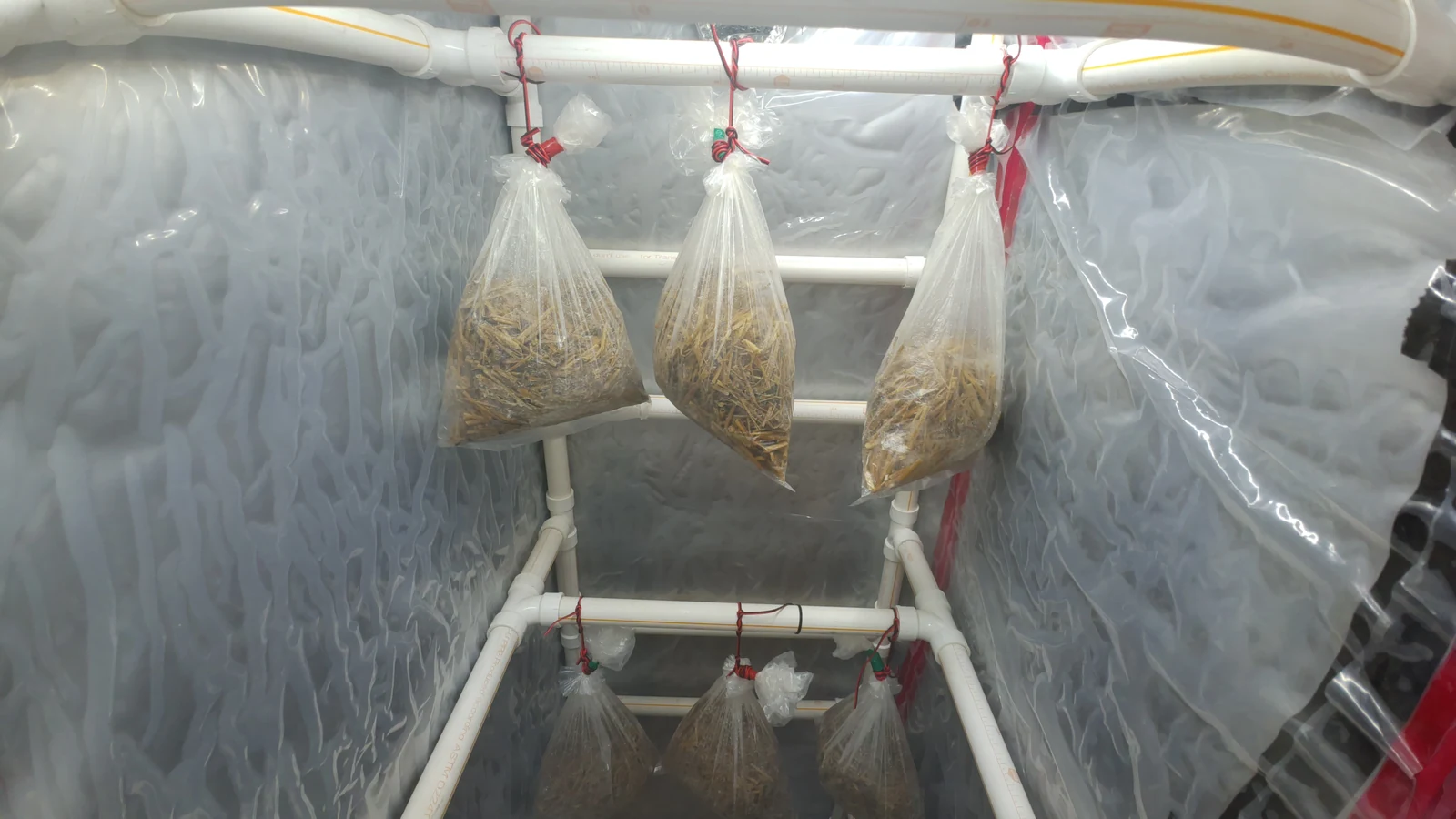
With the bags colonized, I removed their tops at the pinning and fruiting stage to give the cameras a clearer view.

What happened

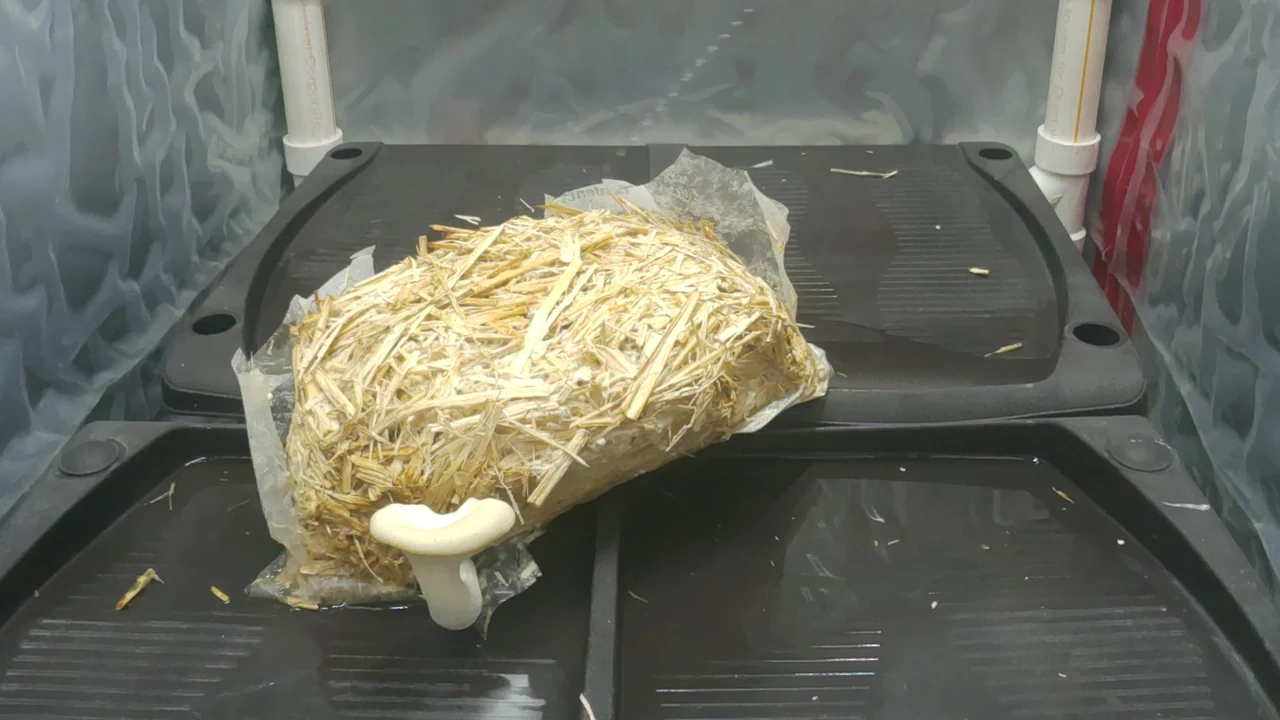
Most bags rotted. Only one bag fruited, captured in the two-day film.

Why

Water from the humidifier pooled in the open tops and soaked the straw.

CARRIED IN

  • RUN 01A desert air cooler, to bring warm days down from about 29 °C to 25 °C.
  • RUN 01Surgical tape over the bag openings, letting air in while keeping bacteria out.
CARRIED FORWARD

  • Keep the bag tops closed, so mist cannot collect inside.
  • Cut slits along the sides for the mushrooms to fruit through.
The only bag that fruited · 28–29 Oct 2026Open the film

33 ambient-camera stills, one an hour, cropped to the bag. The film jumps from the evening of 28 October to the morning of 29 October, when the bag sits in a new spot.

RUN 03 / IN PROGRESS · INCUBATION

Cooler, taped, and closed at the top.

CAMERA RECORDFrom 1 Nov 2026

What I’m trying

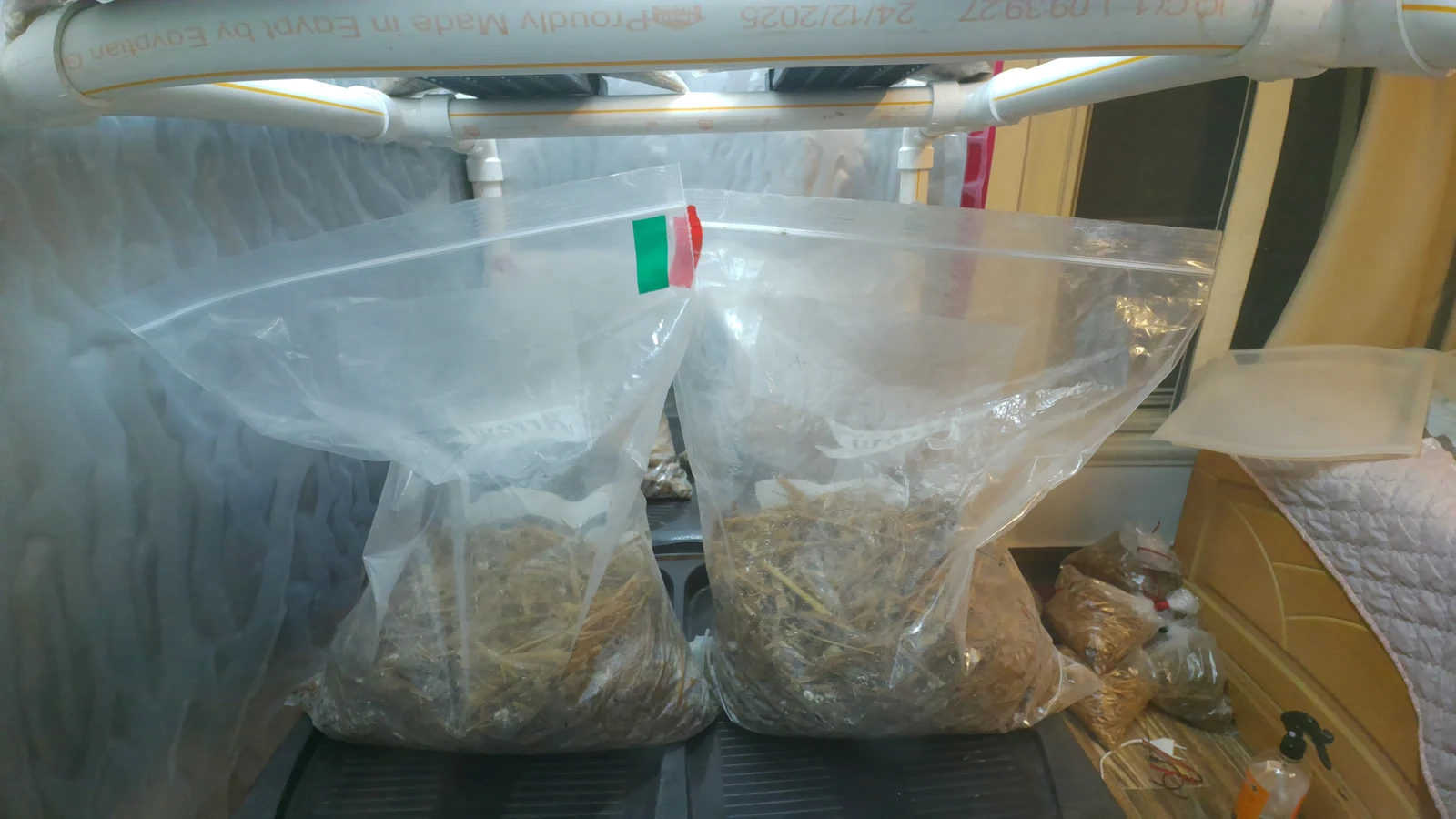
Everything the first two runs taught, in one run: a cooler tent, bags that can breathe through surgical tape, and side slits instead of open tops when the bags reach fruiting.

So far

The bags are incubating.

CARRIED IN

  • RUN 01A desert air cooler, to bring warm days down from about 29 °C to 25 °C.
  • RUN 01Surgical tape over the bag openings, letting air in while keeping bacteria out.
  • RUN 02Keep the bag tops closed, so mist cannot collect inside.
  • RUN 02Cut slits along the sides for the mushrooms to fruit through.

ON CAMERA

No photographs published from this run yet. Selected stills will appear here as the run develops.

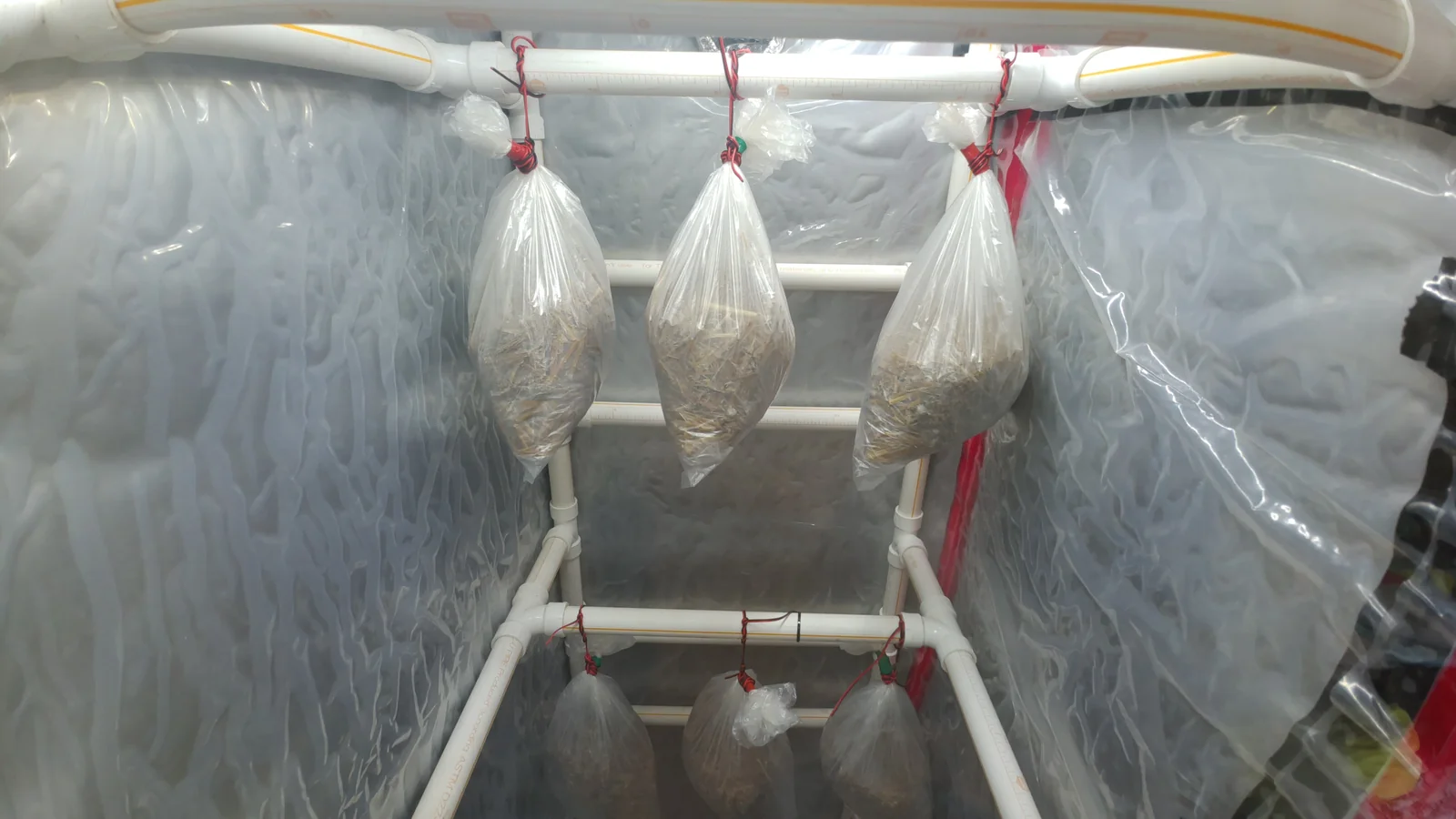
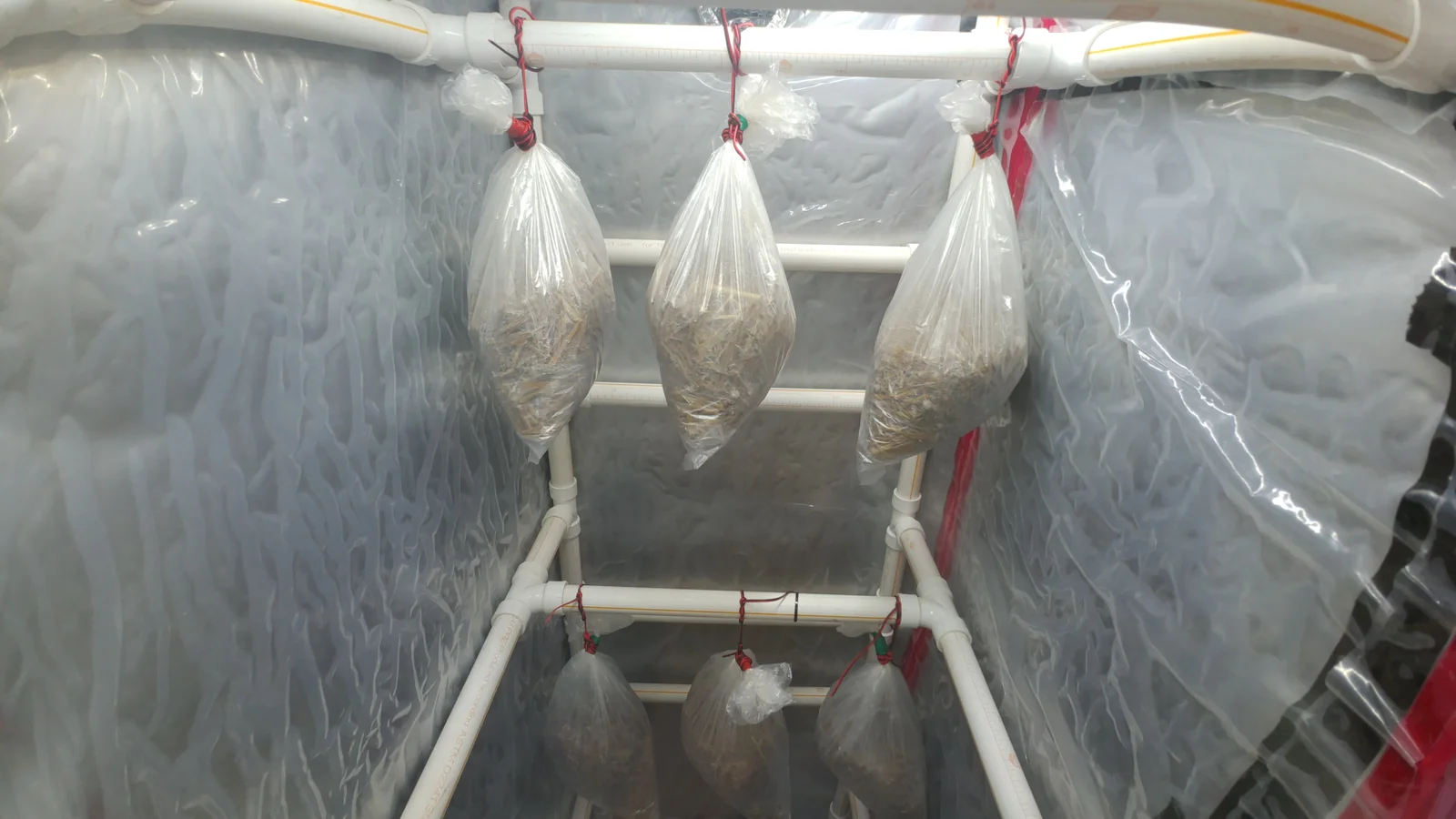
Real camera photograph from 4 September 2026: straw-filled substrate bags hanging from the PVC frame inside the controlled tent.
Real camera photograph from 19 August 2026: the same view, earlier in incubation.
Drag across the photograph to compare the first and last published stills, 16 days apart.
Real camera photograph from 19 August 2026: straw-filled substrate bags hanging from the PVC frame inside the controlled tent.
01
Real camera photograph from 27 August 2026: straw-filled substrate bags hanging from the PVC frame inside the controlled tent.
02
Real camera photograph from 4 September 2026: straw-filled substrate bags hanging from the PVC frame inside the controlled tent.
03

Source: controlled-camera captures from the first cultivation experiment. Dates shown in Cairo time (UTC+3).

A record of
slow change.

Some changes are easier to see when you give them time.

These photographs come from the controlled tent during incubation. They show the bags and their surroundings at selected moments, without turning a visual impression into a growth claim.

HOW THEY ARE TAKEN

CAMERA
Raspberry Pi Camera Module 3 Wide
WHICH CAMERA
The controlled tent camera
INTERVAL
A still every six hours during incubation; schedules change by phase
RESOLUTION
Captured at full resolution; published here at 1600 × 900
How these are captured: the Record path

THE INCUBATION SEQUENCE

18 days,
in 12 seconds.

The same tent, photographed over 18 days. This silent sequence brings 73 scheduled incubation stills together, one every six hours.

Hanging substrate bags remain in view as the camera records the interior of the tent. The film shows the captured sequence, without generated frames. Drag along the days beneath it to step through it one photograph at a time.

Download the film
73 scheduled stills · 18 Aug-5 Sep 2026 · Controlled tent

From looking
to recognizing.

Can the Pi tell me when the mushrooms are ready to harvest?

The chamber already photographs the bags every hour from two cameras. The aim is for the Raspberry Pi's AI HAT+ 2, with its Hailo-10H accelerator, to run a detector on those photos on the device itself.

What the model receivesA camera photo of 4608 by 2592 pixels is shrunk to the model's 640-pixel input. At that size the single young mushroom on the straw bag is about 10 pixels wide, roughly one sixty-fourth of the frame's width.640 PX · WHAT THE MODEL RECEIVESthe mushroom≈ 10 px wide
The dot is to scale: 10 of 640 pixels across, from a 4608 × 2592 photo. The bag is a sketch.

A model is only as good as how closely its training data matches the real setup.

01

DONE · PUBLIC DATA

Trained on a commercial farm

About 555 photos with 8,281 labelled oyster mushrooms from a farm in Turkey, each marked mature or immature. A small YOLO11 detector trained on them found about two-thirds of the mushrooms in that farm's own test photos and sorted them correctly.

02

DONE · ON THE PI

Compiled for the Hailo chip

On the AI HAT+ 2 the chip ran the model at about 240 frames per second, and a full detection took about 36 ms. On paper, it worked.

03

FAILED · IN MY CHAMBER

Tested on a day of my photos

A full day of hourly photos of one straw bag with a single young mushroom.

  • It missed the real mushroom. At the model's input size the mushroom is about 10 pixels wide, too small to recognise. Even cropped to just the bag, it was found in only 2 of 10 clear frames.
  • It saw mushrooms that weren't there. On a night the lens fogged, it reported the pale grey haze as a large mature cluster.
04

NEXT · MY OWN DATA

Training on my own fruiting

The current batch is photographed hourly by both cameras from the first pins to harvest: roughly 250–350 photos of this chamber, its lighting and its substrate, with a note of when each mushroom was actually ready to pick.

  1. Label the photos, correcting first-guess boxes drawn by the current model.
  2. Retrain the model on my own fruiting sequence.
  3. Crop each photo to the bag, so the mushrooms are large enough to see.
  4. Compile for the Hailo chip again and run it live on both cameras.

WHY IT FAILED

The farm the model learned from, against the chamber it was tested in
The training farmMy chamber
BagsDark plasticA golden straw bag
GrowthDense clustersA single mushroom
LightNight-vision lightingA bright white tent

Detection models learn the look of their training photos, not the general idea of “a mushroom”.

NO MATCHING PUBLIC DATA

  • Indoor grow tents, but mostly pink oysters on stacked buckets.
  • White oysters on hanging bags, but every frame from a single 20-minute video.
  • Close-ups with no maturity labels, or behind a paywall.

None shows a white oyster mushroom growing from pin to harvest on a straw bag in a setup like this one.

Annotated detections from my own fruiting sequence will appear here once the batch has been labelled and the model retrained. Nothing shown here is a demonstration detection.

EXPLORE THE PROJECT

A link still to come.

The public project link is not available here yet.

You can explore the experiment, hardware, and system documentation on this site.

Read the documentation